
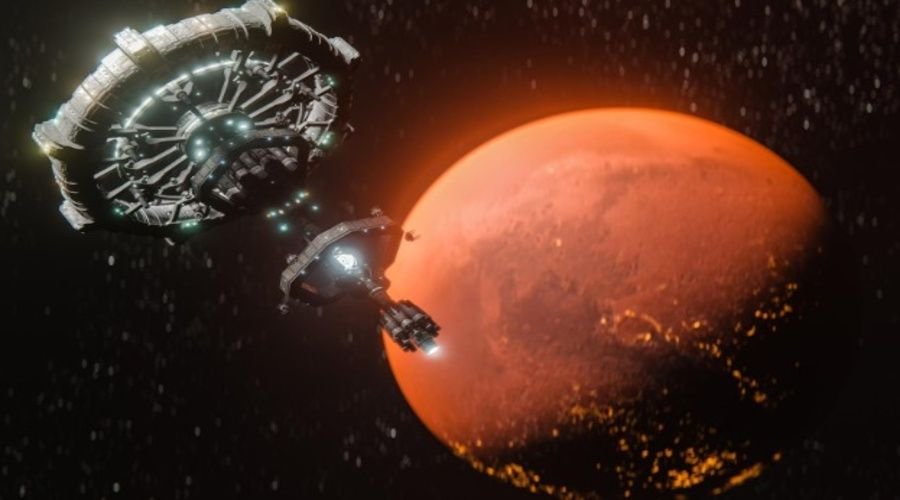
Getting excited about life on Mars is easy. I get pulled in every time I see a new mission update or a glossy concept image of shiny habitats on red soil. But once I looked deeper, I realized the real story is much harder, more technical, and far more human. The biggest colonizing mars challenges are not just about getting there. They are about staying alive, staying sane, and building a life that can actually last.
Why Does Mars Sound So Close but Feel So Far?
Mars seems reachable because spacecraft already visit it, rovers drive across it, and scientists talk about future crews with growing confidence. From a distance, that makes settlement feel like the next logical step. But sending robots and building a lasting human presence are completely different goals.
A human mission to Mars involves long travel time, delayed communication, and almost no room for error. On Earth, teams can respond quickly when something breaks. On Mars, crews may have to solve life-threatening problems on their own with limited tools, delayed support, and harsh surroundings that never really forgive mistakes.
What Makes Survival on Mars So Difficult?
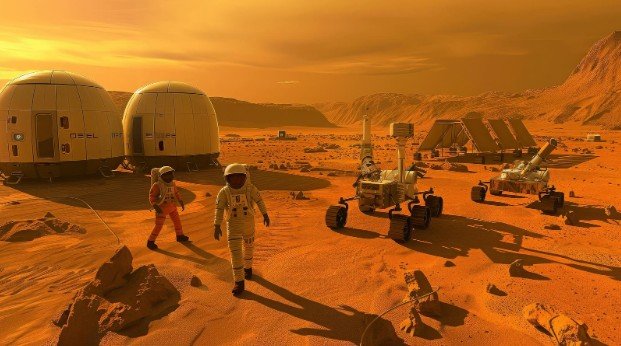
The first major problem is radiation. Mars has a thin atmosphere and no global magnetic shield like Earth. That means astronauts would face much higher exposure to cosmic rays and solar radiation during the journey and while living on the surface. Any long-term habitat would need serious protection, possibly through underground shelter, thick shielding, or advanced materials.
The second issue is the atmosphere itself. Mars has very little oxygen and extremely low air pressure. Humans cannot breathe there, and exposed liquid water is unstable in those conditions. Every breath, every drop of water, and every temperature control chamber would depend on systems that must work constantly without failure.
The cold adds another layer of difficulty. Mars is not just chilly. It is brutally cold, especially at night. Dust also makes things worse. Martian dust is fine, clingy, and potentially damaging to equipment, seals, solar panels, and human health. A settlement would need reliable ways to filter air, clean machinery, and protect living spaces from contamination.
Life Support Cannot Be Good Enough
On Mars, life support is not a background system. It is the mission. Oxygen generation, water recycling, waste processing, and air filtration must stay dependable every single day. Even a small failure can become a crisis quickly.
That is why redundancy matters so much. Settlers would need backup systems, spare parts, repair tools, and the skills to fix problems without waiting for help. Survival would depend on engineering, maintenance discipline, and constant monitoring.
Food Has To Be Grown or Carefully Shipped
Food sounds simple until you imagine feeding people for months or years in another world. Shipping every meal from Earth would be costly and impractical. A lasting settlement would need greenhouses, preserved supplies, and highly efficient growing methods.
Can Humans Physically and Mentally Handle Life There?
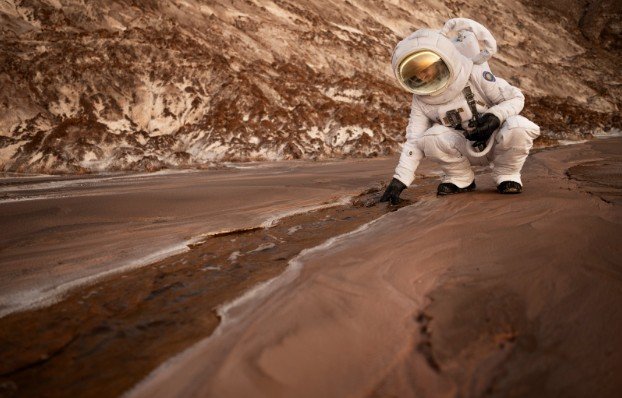
One of the most overlooked parts of settlement is the human body. Reduced gravity may weaken muscles and bones over time. Scientists still do not fully know how years in Martian gravity would affect the heart, balance, immune system, reproduction, or child development.
Those unknowns matter if the goal is not a short visit but a functioning community. Mental health matters just as much. Isolation, confinement, monotony, and distance from Earth could weigh heavily on crews.
Delayed messages from loved ones, limited privacy, and the pressure of knowing there is no quick rescue could create intense emotional strain. I think this is where dreamers often underestimate the cost. A Mars settlement must support not just survival, but morale, purpose, and healthy social structure.
Why Is Landing on Mars Still a Serious Problem?
Landing on Mars is harder than many people realize. The atmosphere is thick enough to create dangerous heating during entry but too thin to slow heavy spacecraft easily. That awkward middle ground makes landing large cargo, habitats, and human crews one of the toughest engineering puzzles in spaceflight.
Before people can live there, massive equipment must arrive safely first. Power systems, construction tools, food reserves, medical supplies, and shelter materials all have to land intact. If even one critical cygnus cargo mission fails, the entire settlement plan could be delayed or put at risk.
Energy Will Decide Everything
A settlement without reliable energy is not a settlement at all. Power is needed for heat, oxygen production, communications, water recovery, research, and food systems. Solar energy can help, but dust and weather may reduce output.
That means long-term plans may also need nuclear options or other stable power solutions. Energy is what connects every other problem. If power fails, nearly every survival system fails with it. That is why energy planning may become the real backbone of any Mars base.
How Would I Build a Smarter Path to Mars Living?
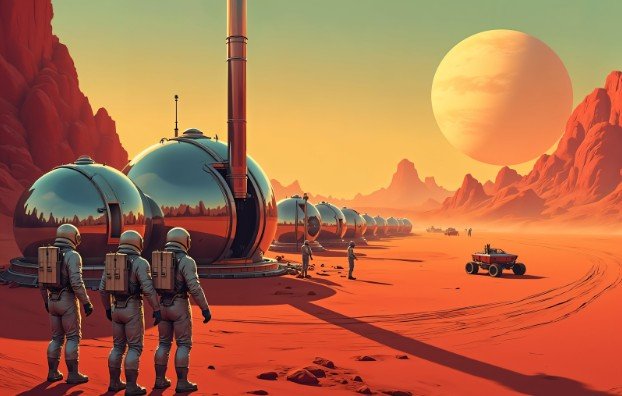
If I were designing a realistic path forward, I would start smaller than the flashy visions suggest. First, I would send more robotic missions focused on habitat testing, local resource use, and surface construction.
Then I would prove that oxygen, water processing, and power systems can run for long periods with minimal intervention. After that, I would focus on cargo-first strategy. Safe landing of equipment should come before large human crews.
I would also prioritize radiation shielding, mental health design, and practical living systems over futuristic aesthetics. To me, the smartest response to colonizing mars challenges is not bigger promises. It is better preparation.
Frequently Asked Questions
1. What are the biggest colonizing mars challenges?
Radiation, low gravity, thin atmosphere, dust, food production, mental health, and safe landing systems are the biggest barriers to a lasting human settlement.
2. Could humans breathe on Mars without machines?
No. Mars does not have a breathable atmosphere, so humans would need fully controlled habitats and life-support systems.
3. Is Mars colonization possible this century?
It may be possible in stages, but permanent settlement depends on major advances in landing, shielding, power, and sustainable life support.
4. Why is Mars harder than the Moon?
Mars is farther away, harder to resupply quickly, and more complex to land on with heavy cargo and human crews.
A Realistic Look Ahead
The dream of Mars still fascinates me, and I understand why. It speaks to curiosity, ambition, and the part of us that wants to build beyond limits. But the path forward only becomes credible when we take the hard parts seriously. colonizing mars challenges are not reasons to stop dreaming. They are the exact problems we have to solve with patience, humility, and better engineering.