
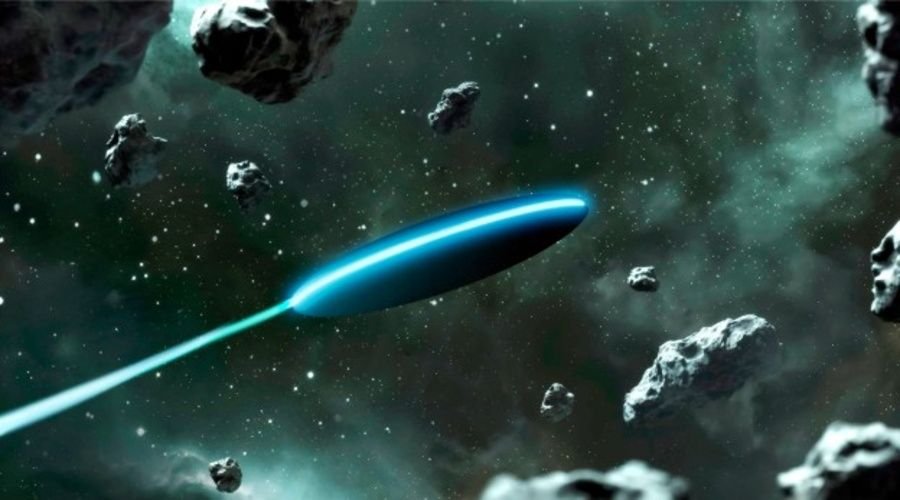
I have always been fascinated by how fast things can actually move beyond our planet. At first, I assumed rockets or planets would top the list, but once I explored deeper, I realized the answer is far more mind-blowing. The universe operates on a completely different scale, and understanding it changed how I see speed forever.
When I started researching this topic, I noticed most people look for a simple answer. But the truth is, speed in space depends on what you are measuring. Some things have mass, some do not, and some behave in ways that challenge what we think is possible.
Why Space Speeds Feel Impossible to Understand
Space is so vast that even the fastest objects we know on Earth feel insignificant. A commercial jet or even a supersonic aircraft is nothing compared to what happens in space. That difference is what makes this topic confusing at first.
What helped me was breaking everything into categories. Instead of trying to compare everything at once, I started looking at light, particles, stars, and human-made objects separately. That shift made everything much easier to grasp.
What Is the Fastest Thing in the Universe?
When people search for the fastest objects in the universe, they usually expect one clear winner. The truth is that light holds that title. It travels at about 299,792 kilometers per second, and nothing with mass can reach or exceed that speed.
Light is not just fast; it defines the limit of speed in physics. Everything else is measured against it. Once I understood this, it became easier to place other objects into perspective.
Can Anything Travel Faster Than Light?
This is one of the most common questions I had when learning about space. According to current physics, nothing with mass can travel faster than light. As an object speeds up, it requires more and more energy, making it impossible to cross that limit.
However, there is an interesting twist. The expansion of the universe can make distant galaxies appear to move away faster than light. This does not break the rules because it is space itself expanding, not objects moving through space in the usual way.
Fastest Objects With Mass in Space
Once we move beyond light, things get really interesting. Some of the fastest objects with mass come incredibly close to light speed, and they exist in some of the most extreme environments in the universe. The phrase fastest objects in the universe includes more than one category, and understanding that makes the topic much richer and more exciting.
Blazar Jets
Cosmic Rays
Cosmic rays are tiny particles, but their speed is extraordinary. Some of them move so close to light speed that the difference is almost negligible. Even though they are small, their energy and motion are incredibly powerful.
Hypervelocity Stars
Some stars get launched across galaxies due to gravitational interactions, often involving black holes. These stars move much faster than many types of different typical stars, making them some of the fastest large objects we have ever observed.
The Fastest Human-Made Object Ever Built
One of the most impressive achievements I came across is the Parker Solar Probe. It was designed to study the Sun and has reached speeds that no other human-made object has achieved. Even at its peak speed, it is still much slower than light or cosmic particles. That comparison really shows how extreme natural forces in the universe are compared to human engineering.
How I Simplify These Speeds
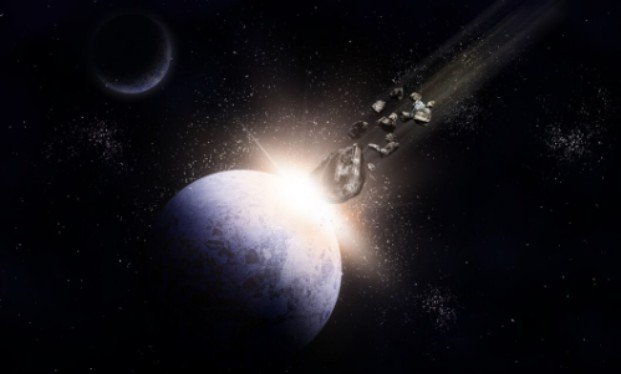
The easiest way I explain this topic is by grouping everything into layers. At the top, you have light, which sets the ultimate limit. Below that are particles and jets that come close to that speed. Then come stars and other massive objects, followed by spacecraft. This layered approach made everything clearer for me, and it is something I always recommend if you feel overwhelmed by the numbers.
Why Understanding Speed in Space Matters
At first, this topic might feel like pure curiosity, but it actually plays a huge role in science. Speed helps scientists understand how energy works, how black holes behave, and how the universe evolves over time. For me, learning about speed in space was not just about numbers. It was about understanding the rules that shape everything around us.
Frequently Asked Questions
1. What are the fastest objects in the universe?
Light and other forms of electromagnetic radiation are the fastest, followed by near-light-speed particles like cosmic rays and powerful jets from black holes.
2. Is light faster than everything else?
Yes, light is the fastest known thing in the universe and acts as the ultimate speed limit.
3. What is the fastest human-made object?
The Parker Solar Probe holds the record as the fastest human-made object ever built.
4. Can anything travel faster than light?
Based on current physics, nothing with mass can travel faster than light.
Wrapping It All Together
When I first explored this topic, I expected a simple answer. Instead, I discovered a layered and fascinating system that completely changed how I think about speed. The universe is not just fast; it operates at levels that are hard to fully imagine.
If you look at this topic the right way, it becomes less about finding one winner and more about understanding how different kinds of motion exist across space. That perspective is what makes learning about the fastest objects in the universe so unforgettable.