Building strength, speed, and endurance at home used to feel limiting, but after testing different routines, it became clear that a home workout for athletes can deliver serious performance gains without needing a gym. The key is not equipment but structure, intensity, and purpose.
Why Home Workout For Athletes Works
Training at home can be just as effective when it is designed for performance rather than convenience.
Performance Over Convenience
A proper home workout for athletes focuses on explosive power, functional strength, and mobility instead of random exercises. Every movement should translate to real athletic performance.
This approach helps build speed, coordination, and strength that actually carry over into sports, making each session more meaningful.
Structured Training Approach
The biggest difference between average workouts and athlete-focused training is structure. A clear sequence keeps your body progressing instead of plateauing. Using a consistent format like warm-up, power, strength, and conditioning ensures your training covers all key areas of performance.
Consistency And Adaptability
Training at home removes barriers like travel time and crowded gyms. This makes it easier to stay consistent and focused on long-term improvement. Over time, consistency builds stronger habits and allows you to refine your technique without distractions.
The Four Phase Athlete Structure
This is the foundation of any effective home workout for athletes and mirrors how professionals train.
Dynamic Warm Up
A proper warm-up prepares your body for high intensity work. Movements like high knees, butt kicks, and dynamic stretching activate muscles and improve mobility. This phase also increases blood flow and reduces the risk of injury, which is critical for athletes training without supervision.
Plyometric Power Training
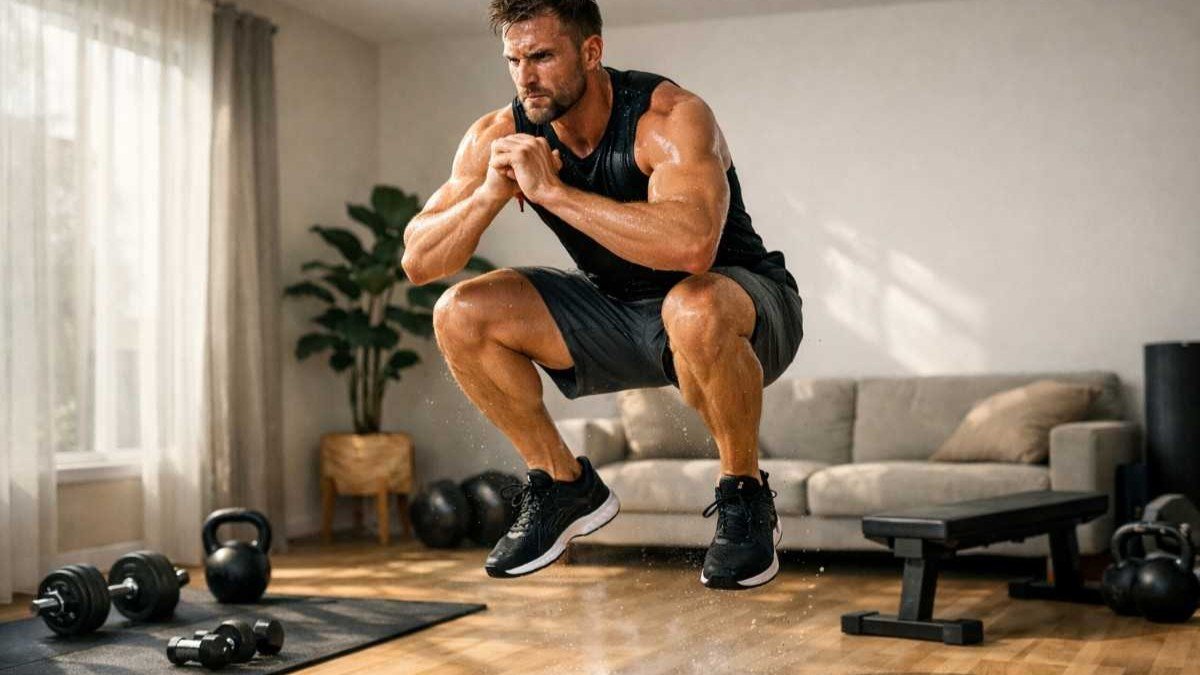
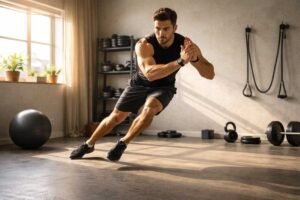
Explosive exercises train your body to generate force quickly. Movements such as jump squats, burpees, and lateral jumps improve speed and reaction time. Power training develops fast-twitch muscle fibers, which are essential for sprinting, jumping, and rapid direction changes.
Strength Circuit Training
Strength is the base of athletic performance. Bodyweight exercises like push-ups, lunges, and single-leg squats build stability and control. These movements target multiple muscle groups and improve coordination, which is more beneficial than isolated exercises.
Core And Conditioning
A strong core improves balance and movement efficiency. Exercises like planks, V-ups, and mountain climbers enhance endurance and stability. Conditioning work also improves cardiovascular fitness, helping athletes maintain performance over longer periods.
The Athletic Circuit Home Workout For Athletes
This is a practical routine you can follow to train effectively without equipment.
Warm Up Phase
Start with five to ten minutes of dynamic movement such as high knees, butt kicks, and mobility stretches. This prepares your body for intense activity. Keeping this phase consistent improves flexibility and ensures your muscles are ready for explosive work.
Power And Plyometric Phase
Perform jump squats, speed skaters, and burpees with controlled intensity. Focus on explosive movement and soft landings to protect your joints. This phase builds agility and quickness, which are essential for most sports.
Strength Phase
Move into push-ups, single-leg squats, multi-angle lunges, and tricep dips using a chair. Keep your form strict and controlled. These exercises build strength while improving balance and coordination across different movement patterns.
Core And Conditioning Phase
Finish with planks, V-ups, and mountain climbers to challenge your endurance and increase core stability. This final phase ensures your body can sustain performance under fatigue, which is critical for athletes.

How To Home Workout For Athletes
Follow this method to turn your sessions into performance-driven training.
Start by setting a clear goal for each session, whether it is strength, speed, or endurance. This helps you train with purpose rather than randomly. Begin with a dynamic warm-up to activate your muscles and prepare your body for intensity.
Move into explosive exercises that challenge your speed and power, focusing on controlled landings and maximum effort during each repetition. This builds athletic ability rather than just fatigue.
Transition into strength training using controlled movements and proper form. Focus on quality over quantity to ensure each rep contributes to muscle development and stability.
Finish with conditioning and core work to build endurance and resilience. End your session with mobility exercises to improve flexibility and support recovery.
Specialized Training Tips For Athletes
Small adjustments can significantly improve your results over time.
Training For Speed
Speed-focused athletes should include reactive drills like pogo jumps and quick footwork exercises. These improve ankle stiffness and acceleration. Short bursts of high intensity movement train your body to react faster during competition.
Training For Endurance
Endurance athletes benefit from interval-based conditioning. Methods like timed running intervals increase stamina and efficiency. Combining endurance work with strength training helps maintain balance and prevents fatigue during long sessions.
Recovery And Mobility
Recovery is just as important as training. Adding mobility work or short stretching sessions helps prevent muscle stiffness and injury. Consistent recovery routines improve flexibility and allow your body to perform at a higher level over time.
Long Term Progress Strategy
Sustainable progress requires planning and consistency in your training approach.

Progressive Overload
To keep improving, gradually increase intensity through more reps, faster movement, or advanced variations. This ensures your body continues adapting and building strength over time.
Push And Pull Balance
If you have access to basic equipment, alternate between push and pull focused sessions. This balances muscle development. Even with bodyweight training, focusing on different movement patterns prevents imbalances and improves performance.
Tracking Performance
Tracking your workouts helps you measure progress and stay motivated. Simple changes like improving speed, reps, or control can indicate real improvement in your training.
Frequently Asked Questions
1. What Is A Home Workout For Athletes?
A home workout for athletes focuses on strength, power, agility, and endurance using structured training methods without requiring a gym.
2. Can A Home Workout For Athletes Replace The Gym?
Yes, with proper structure and intensity, a home workout for athletes can deliver similar performance benefits.
3. How Often Should I Do A Home Workout For Athletes?
Training four to six times per week works well depending on intensity and recovery.
4. Do I Need Equipment For A Home Workout For Athletes?
No, bodyweight exercises and proper programming are enough to build strength and performance.
Final Takeaway
A well-designed home workout for athletes is built on structure, intent, and consistency. Training with a clear focus on power, strength, and mobility allows you to improve performance without relying on a gym. With the right approach, your home workout for athletes becomes a powerful tool for long-term athletic growth and resilience.